2009
Story Case
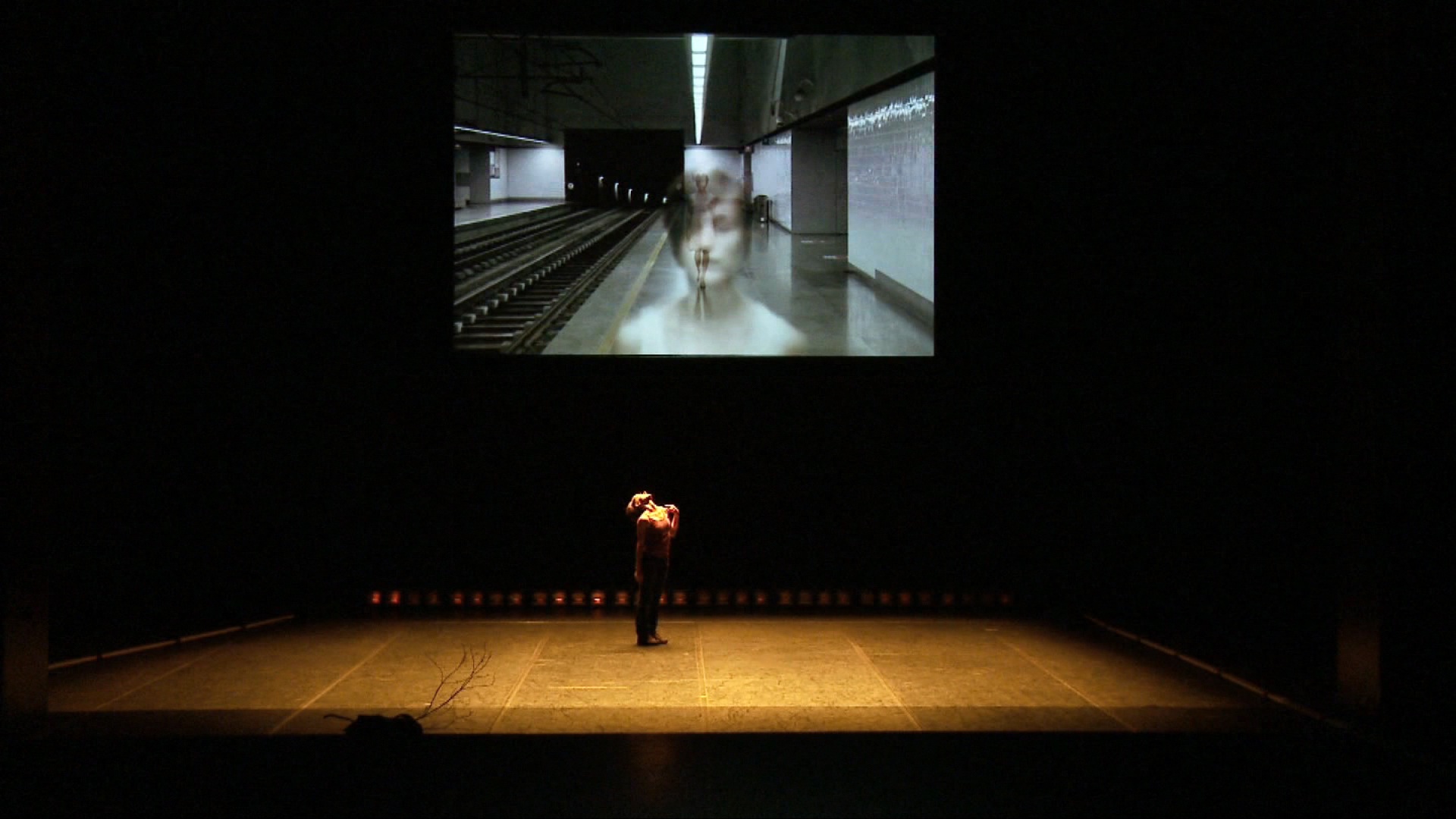
Story Case trata de lugares vazios e de pessoas sem história no sentido de uma história ainda não vista, ainda não realizada. Tal como o corpo na dança, os indivíduos em Story Case surgem-nos e é no decorrer do tempo que os vamos documentando até eles se tornarem personagens. Fotografar essas pessoas faz com que passem a protagonistas e se criem todas as condições para que uma história se abra aos olhos de quem observa. Esta ambivalência documental e ficcional caracteriza o campo de investigação e de explorações deste projecto que reúne a dança e a fotografia e que encontra no deserto o seu motivo inspirador. Como diz Maurice Blanchot: “O deserto, não é ainda nem o tempo, nem o espaço, mas um espaço sem lugar e um tempo sem procriação. Ali, pode-se somente errar, e o tempo que passa não deixa nada para trás de si, é um tempo sem passado, sem presente, tempo de uma promessa que é apenas real no vazio do céu e da esterilidade duma terra nua onde o homem nunca está ali, mas sempre de fora”. Mas para além da metáfora da representação do corpo e desta descolagem do real para produzir outra realidade poética, o deserto é momento vivido e percorrido. Nas palavras de Adalberto Alves, no deserto chegamos “a ouvir o ritmo da respiração que é o reflexo do bater do coração”.
Né Barros
Ficha Técnica
Concepção e coreografia: Né Barros
Fotografia: Cesário Alves
Musica: Alexandre Soares
Intérpretes: Joana Castro e Pedro Rosa
Desenho de luz: José Álvaro Correia
Dispositivo cénico: Teresa Grácio
Edição para projecção vídeo: Hélder Luís
Textos: Adalberto Alves e Maurice Blanchot
Coordenação técnica: Matu
Produção executiva: Patrícia Caveiro
Co-produção: Balleteatro e Teatro Nacional S. João
Classificação: M/12
Duração: 45′
Circulações: Teatro Carlos Alberto (2009)
Imprensa
I want you to know how much I enjoyed watching the DVD of “Story Case.” It’s tremendously haunting, a very chilling study of the existential human condition—of individuals estranged from their environment, unable to ever feel completely “at home” regardless of whether they’re in an urban (man-made) environment) or in the “natural” world. Especially for the female performer, the work generated a sense of perpetual “migration,” of being stranded in a “desert”, both spatial and temporal. We often feel a deep longing for complete absorption into a “continuous present” (made possible by sex or drugs or some sort of trance-inducing activity). But here she seems trapped in a present which is no longer connected in any meaningful way to either a past or a future. The moment when she scarred her own bare back was especially powerful–as was the sequence in which she repeatedly “whistled” in a way that suggested both panic disorientation. This built beautifully into the frantic movements in which she rotated her body weight precariously onto the sides of her feet. And the theatrical elements of the mise en scene were richly imaginative: the suspended white rectangles were striking in their own right, but also very effective as projection screens. I especially liked the moments when we saw images of the actual theater refracted onto the screens. The layering of images was also striking (when the projections appeared on the back of the male dancer and his shadow was then projected onto another surface). His shadow is especially powerful as he takes his shirt off over his head. The images near the end —of the woman with the tree branch and a scarf over her head –powerfully evoke not only migration, but also the plight of a refugee. And the final image (in which she plays the guitar as the lights behind her intensify) felt empowering. I got the impression that she was “in control” of her own destiny for the first time in the course of the dance. Not sure if that’s what you intended, but that’s what was conveyed to me in a powerful way. Finally, it makes perfect sense to learn from the credits that some of the text is by Maurice Blanchot, because he’s so good at constructing a “land without man”: the sort of environment that begs only for our absence. So… Congratulations.
Roger Copeland