2008
Segundo Plano
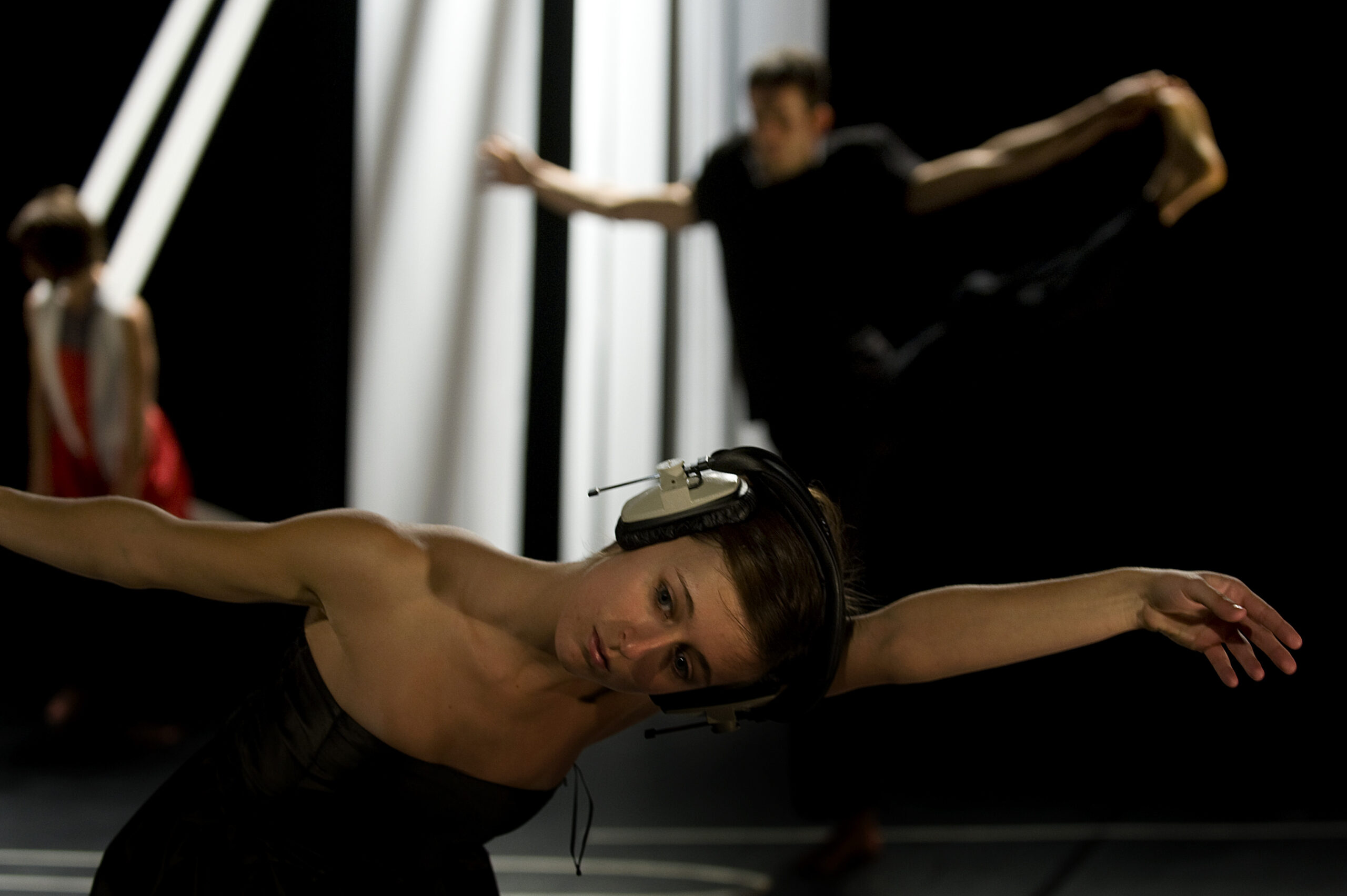
Recurring word in the cinema and photographic language, Segundo Plano asks us mainly questions about the hierarchy of perception and in the meaning construction of what is being observed. I am thinking about Roland Barthes’s punctum and that which burst in the image and the action to hit you, overcoming other aspects and directing the way in which the emotion is shaped. I am thinking to the guise of a palimpsest whereby writings are layered and accumulated over body and actions. I am thinking about some sort of magma made up of multiple and plural sounds, images and actions that simultaneously constitute a reality that not being the foreground it is not the background as well. This project focus on the lines and ambiguity areas between the fore and background, in the order of importance between things, the grounds’ imbalance and as of this state micro narratives and our reality is built. However, I was interested that all this would occur not in a radical fragmentation or in the rejection of a macro narrative, but in the will that a story hovers there. Like a blurred story. In the end, everything is fiction.
Né Barros
Credits
Direcção e coreografia: Né Barros
Música original e interpretação ao vivo: Alexandre Soares
Espaço cénico e figurinos: Né Barros e Gabriela Vaz Pinheiro
Desenho de luz: José Álvaro Correia
Intérpretes: Bruno Teixeira, Joana Castro, Pedro Rosa, Sónia Cunha
Colaboraram num dos temas: Pamelia Kurstin (theremin), Madame Pi (voz) e Gustavo Costa (percussão)
Direcção técnica: Alexandre Vieira
Produção executiva: Patrícia Caveiro
Co-produção: balleteatro e Cine-teatro Constantino Nery – teatro municipal de Matosinhos
Apoio: Centre de Création Chorégraphique Luxembourgeois (TROIS C-L) e Instituto Camões
Agradecimentos: TNSJ
Circulações: Centre de Création Chorégraphique Luxembourgeois (2009),Centro Cultural Vila Flor (2010), Auditório de Espinho (2009), Teatro Constantino Nery (2009), Teatro Municipal da Guarda (2009), Teatro de Vila Real (2009)
Press
Né Barros’s Moving Sensability
We observe first an open and already prepared scene, whose elements indicate that the plot will occur in several spaces of the same scene, suggesting different dimensions and stages according to how far the audience and the other spaces are. Still we understand from the first words we hear that there is a desire of territory that does not depend of clear identification, having subjected the actions to an aware arbitrariness. Throughout the choreography we observe how the creations contribute for the creation of a discreet atmosphere which is never forced to a clarification or which is never looking for a single meaning.
Segundo Plano flows from the orchestrated encounter between sounds, movements, light and bodies being supported by a network of free bonds. The “occurrence and converging stages” build a surreptitious dramaturgy which seeks to escape the obvious and the “radical fragmentation”. Thus, perhaps it would be more accurate to name this discrete landscape a procedure of illusions, which together with “hierarchy in the perception and meaning construction” produces changes in what we observe, yet still can balance these elements never allowing the audience to feel lost.
The choreographer is orchestrating what seems vague, rare and unattainable, having pleasure pulling the threads of possible narratives, shadows of characters and strings of ideas without ever searching, and well might I add, and without ever proposing a meaning. There are sounds that start on stage and are prolonged to the outside. There are chorographical sentences that move from one performer to the other without losing its nature and there are light games which open new areas leaving for the imagination what lies in the edges.
By giving the four performers (Bruno Teixeira, Joana Castro, Pedro Rosa and Sónia Cunha) an individual space that they must be able to fill in through the rarity of intentions, Né Barros gives them a space to explore the dramaturgy and their own body – white as a canvas, one could say, given the multiple potential bonds. It is mainly Joana Castro e Pedro Rosa who, in the brightness of their performances, best deal with the density of this play with the right angle in the movement ambition, intelligence in the narrative time management and richness by the subtleties of a construction that knows how to make the best of the tensions that stem from the different sources of inspiration. One of those sources is the soundtrack by Alexandre Soares, a fifth body also choreographed and which through sound – multiple and convergent – shapes atmospheres and spaces.
It is in the freedom of bonds between the “ambiguity areas” and in the less than obvious atmosphere set in the scene that Segundo Plano overcomes a dreamlike dimension, shuffles “the order of importance of things” and materialises in a sensitive shuttle, weaving a multiple and unique portrait of independent images of which Né Barros manages with a moving sensibility.
Tiago Bartolomeu Costa