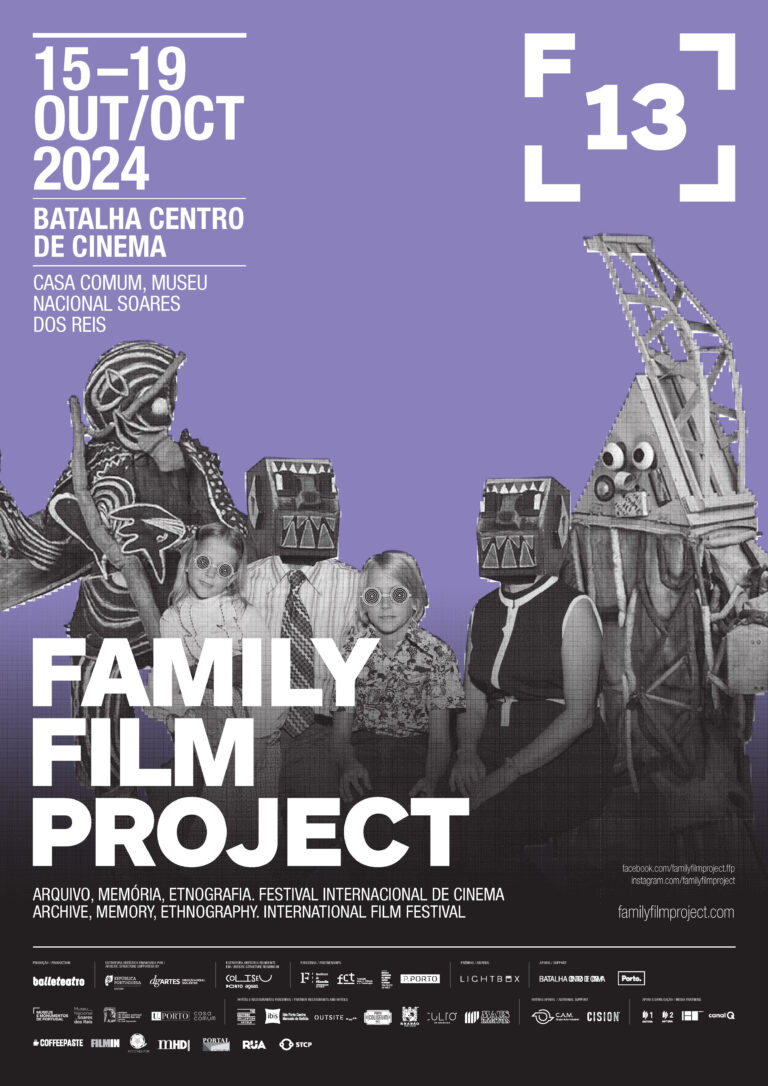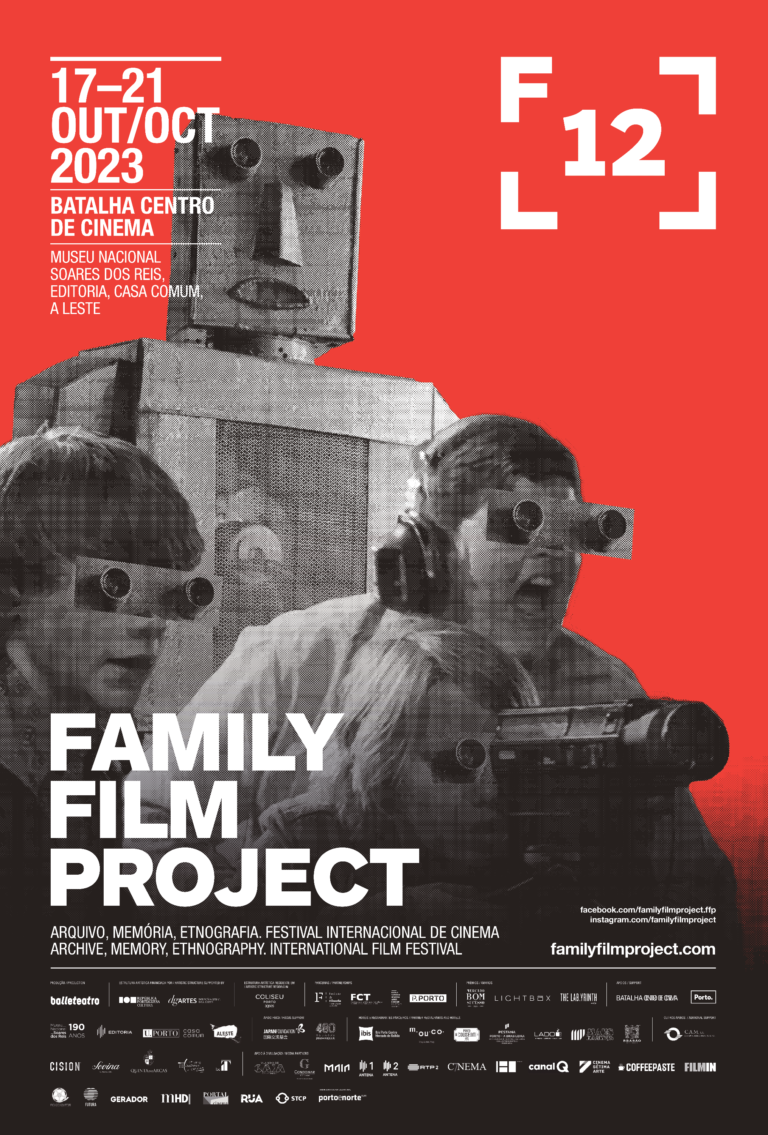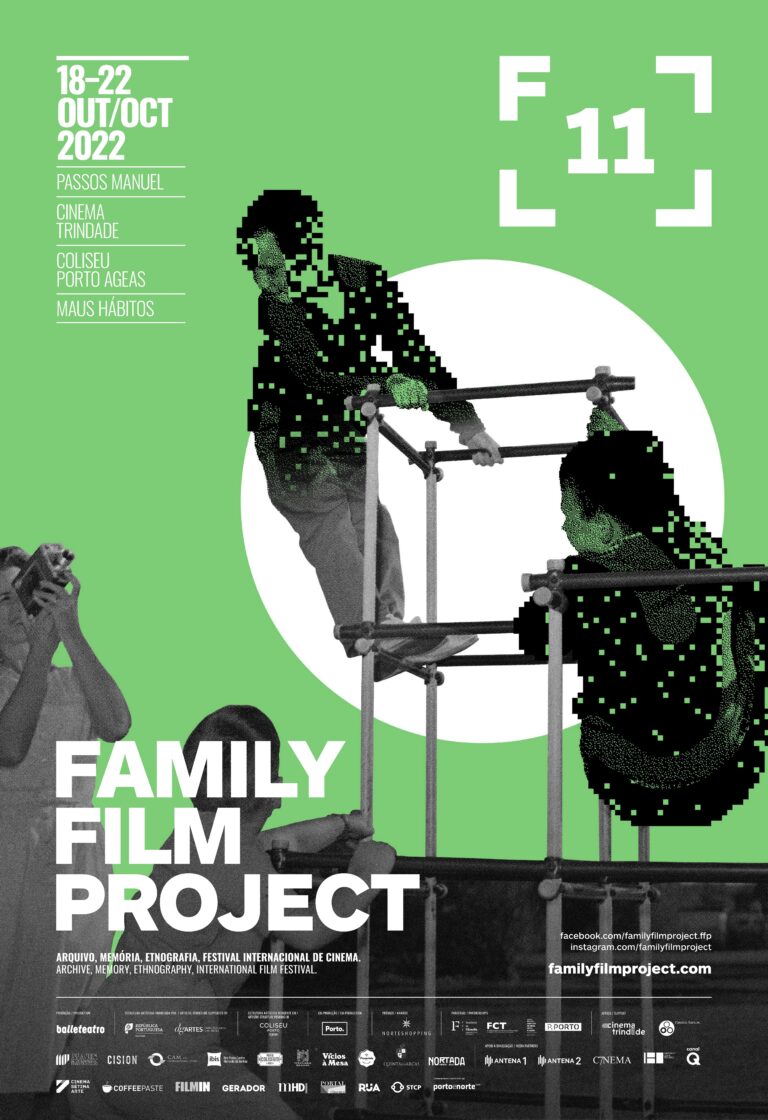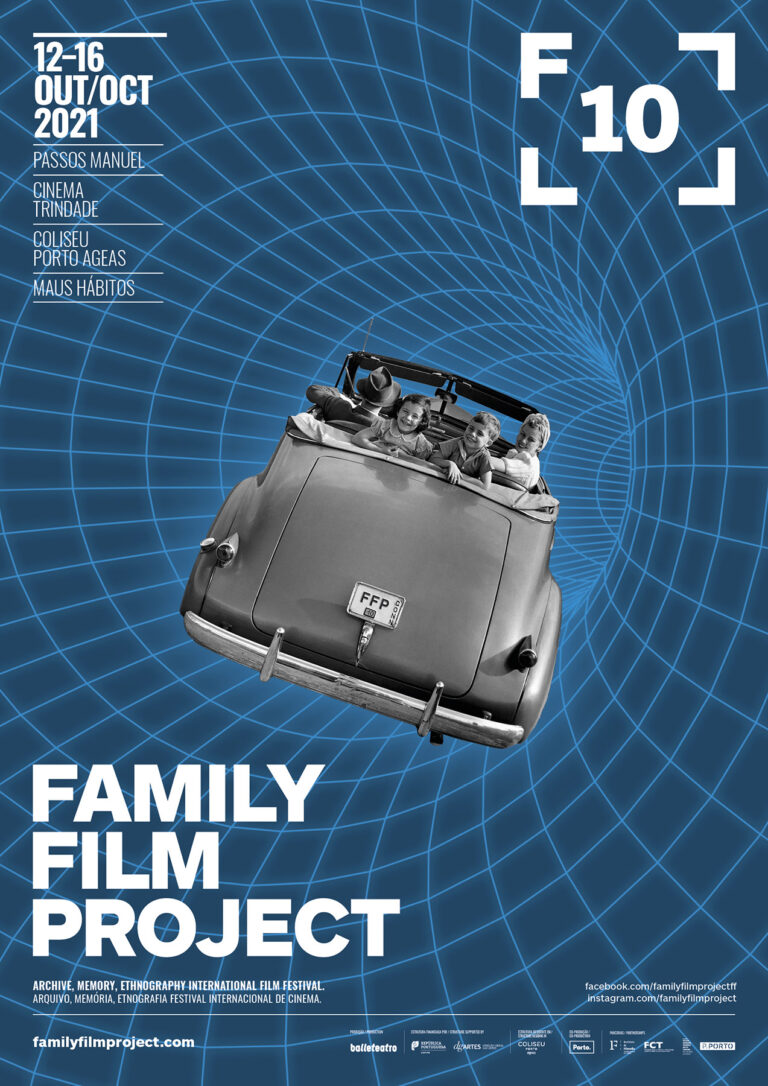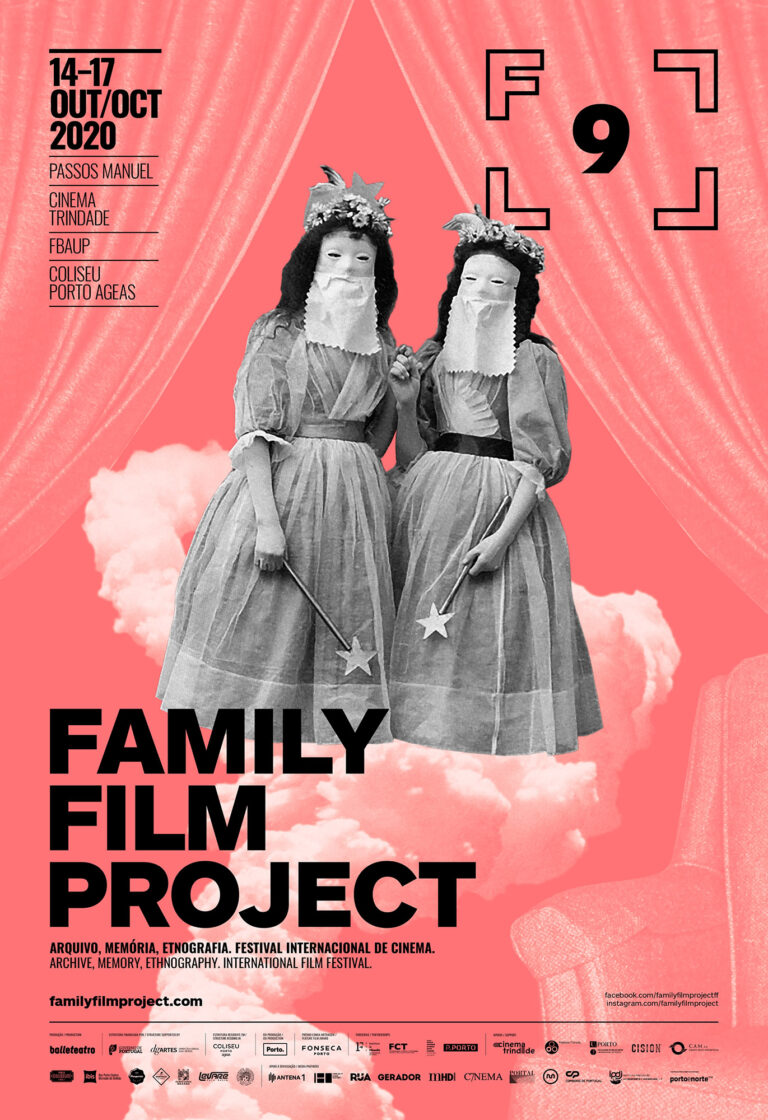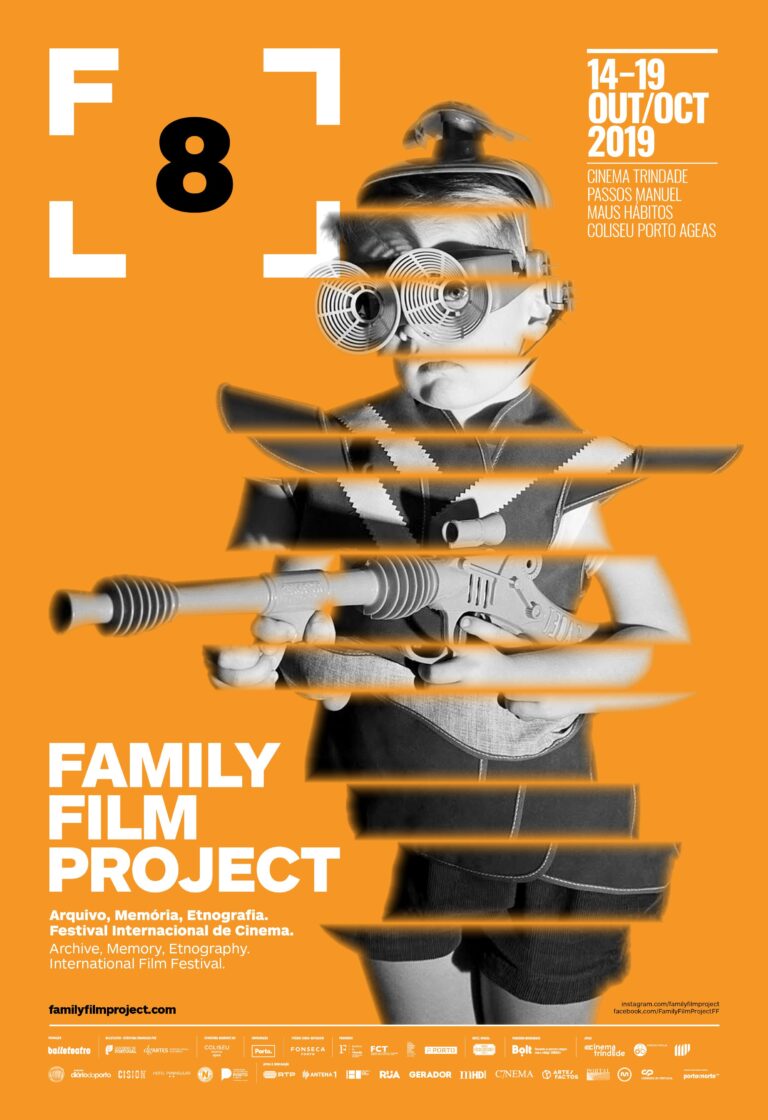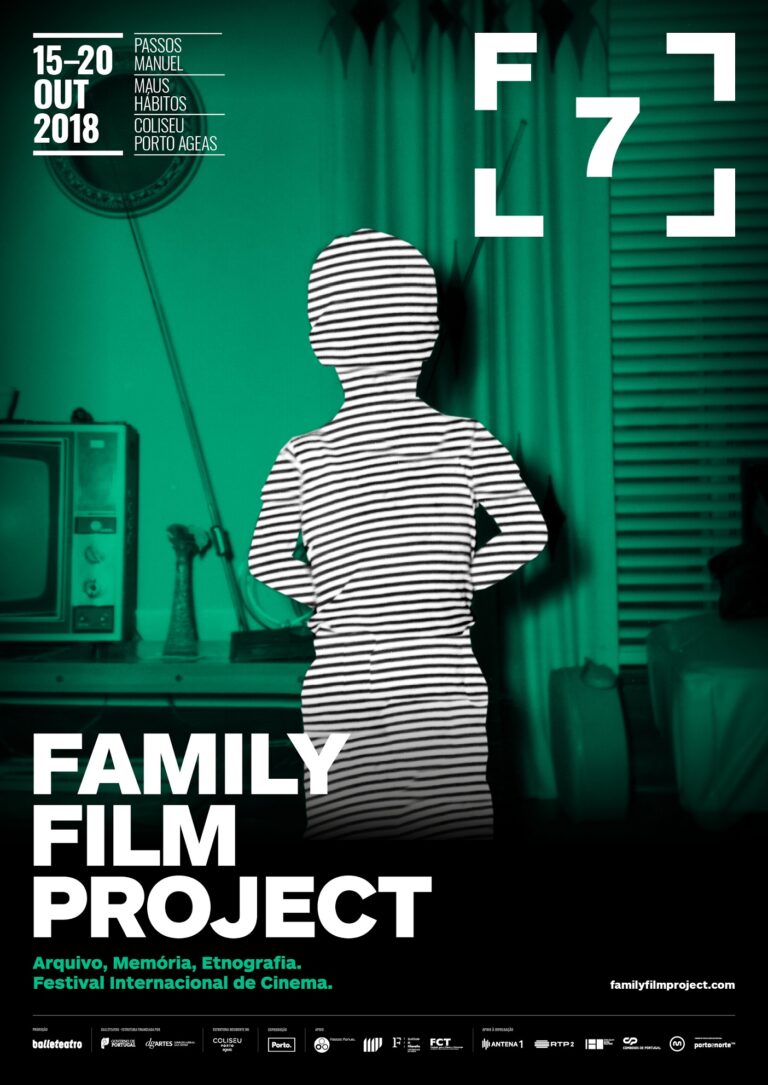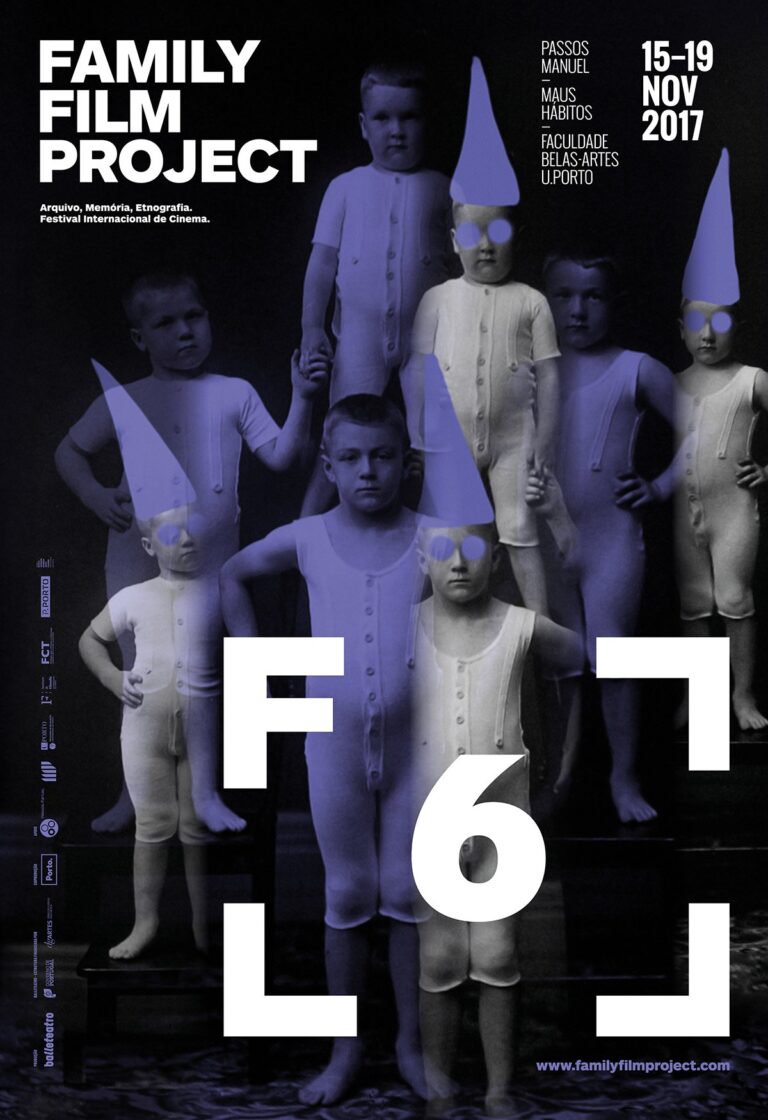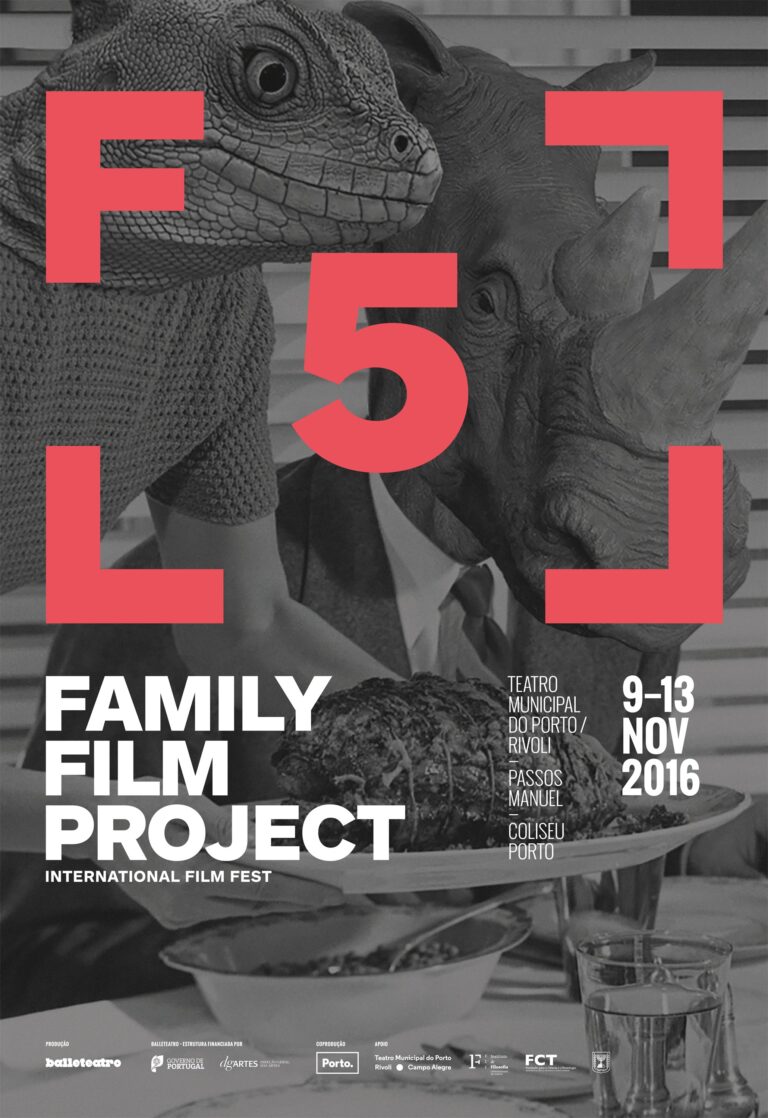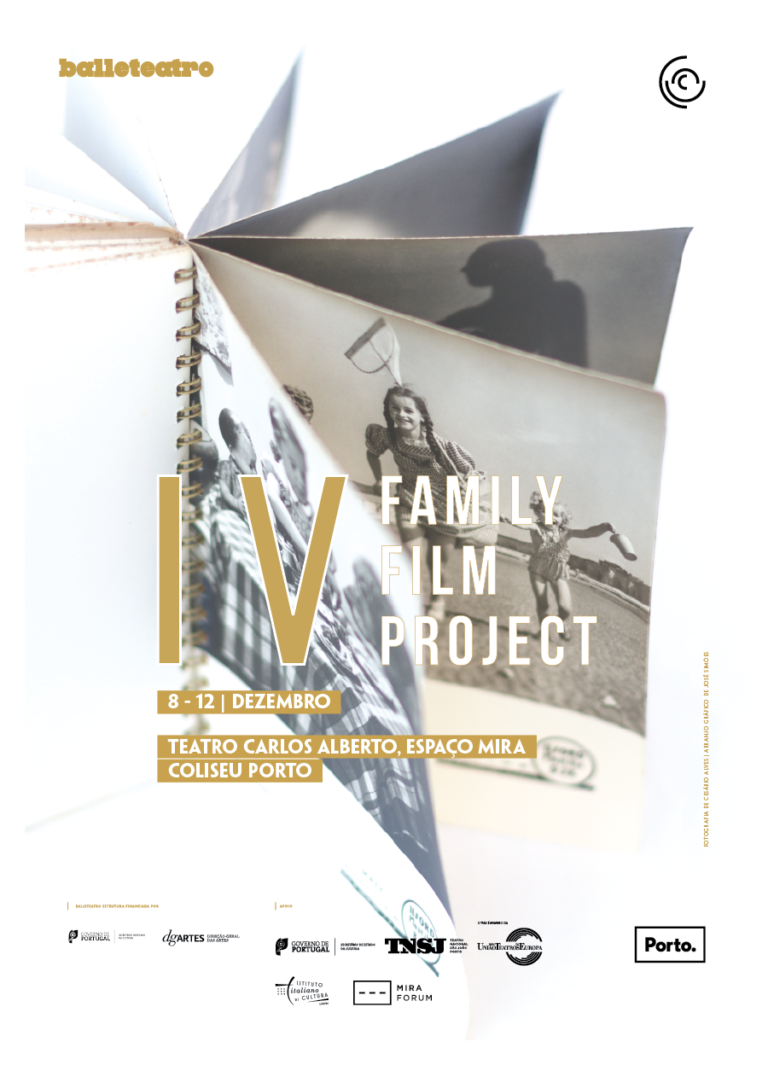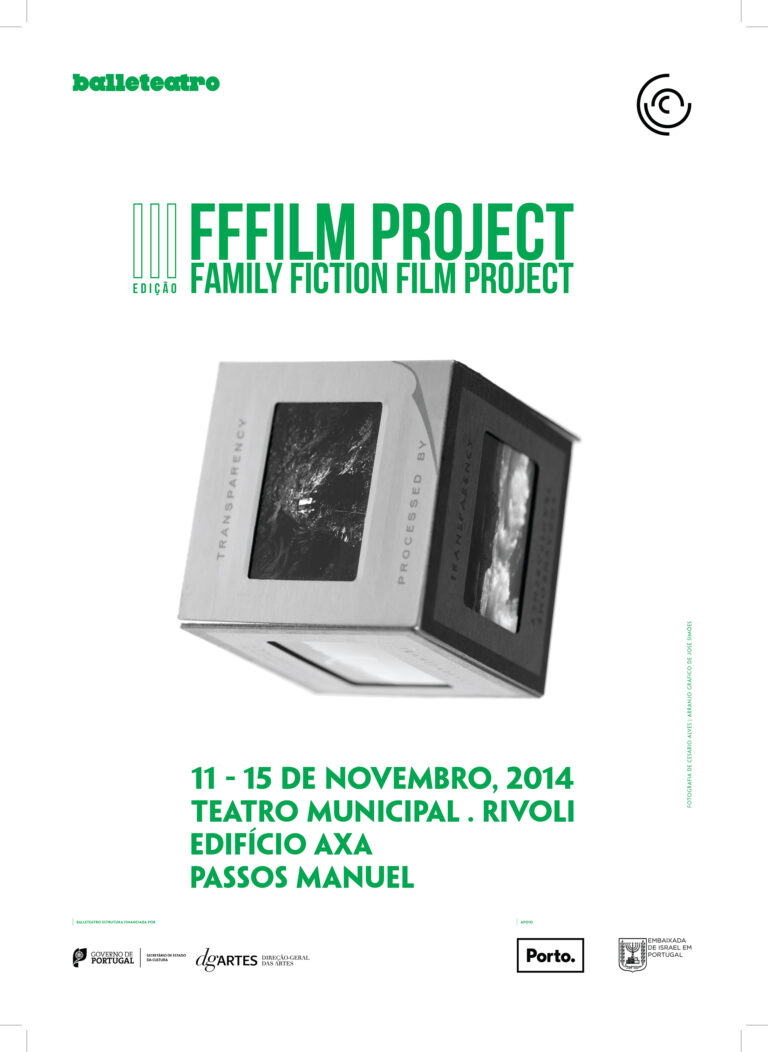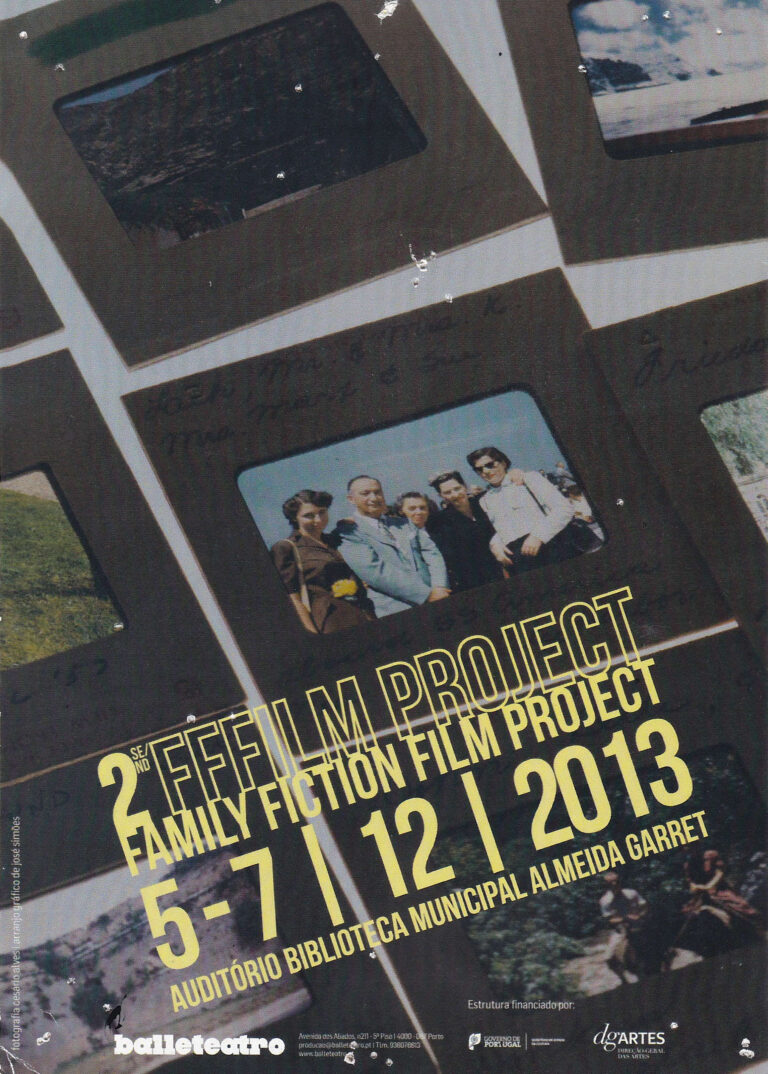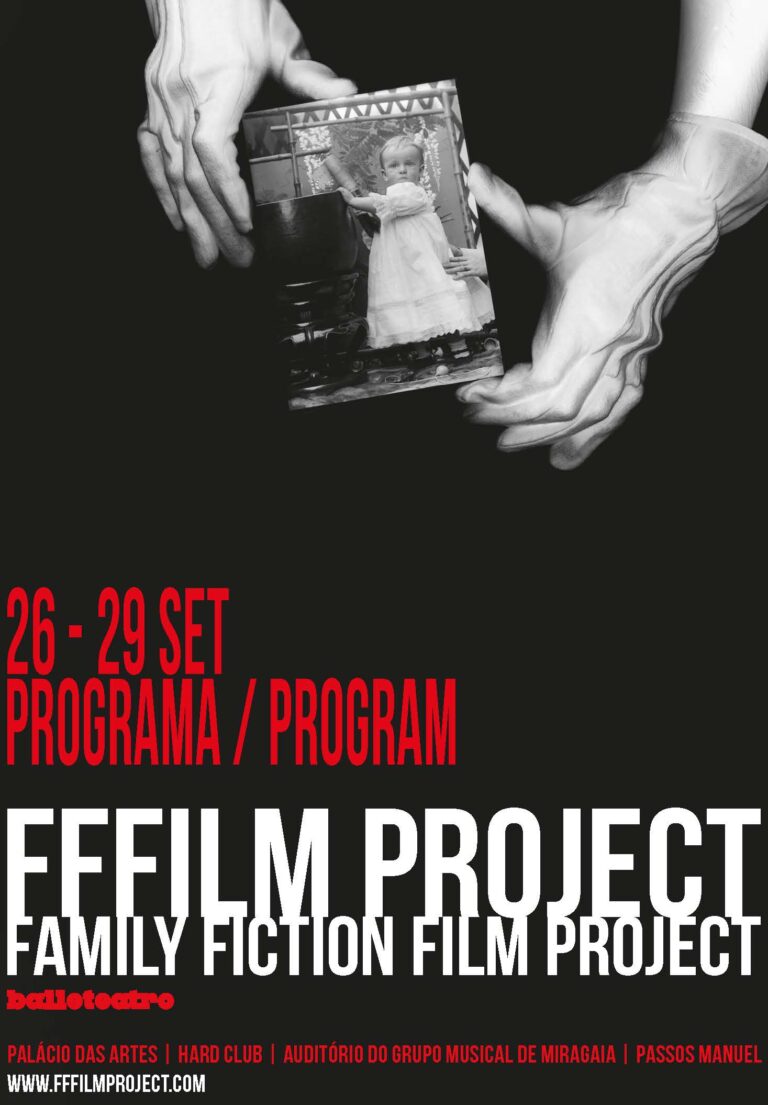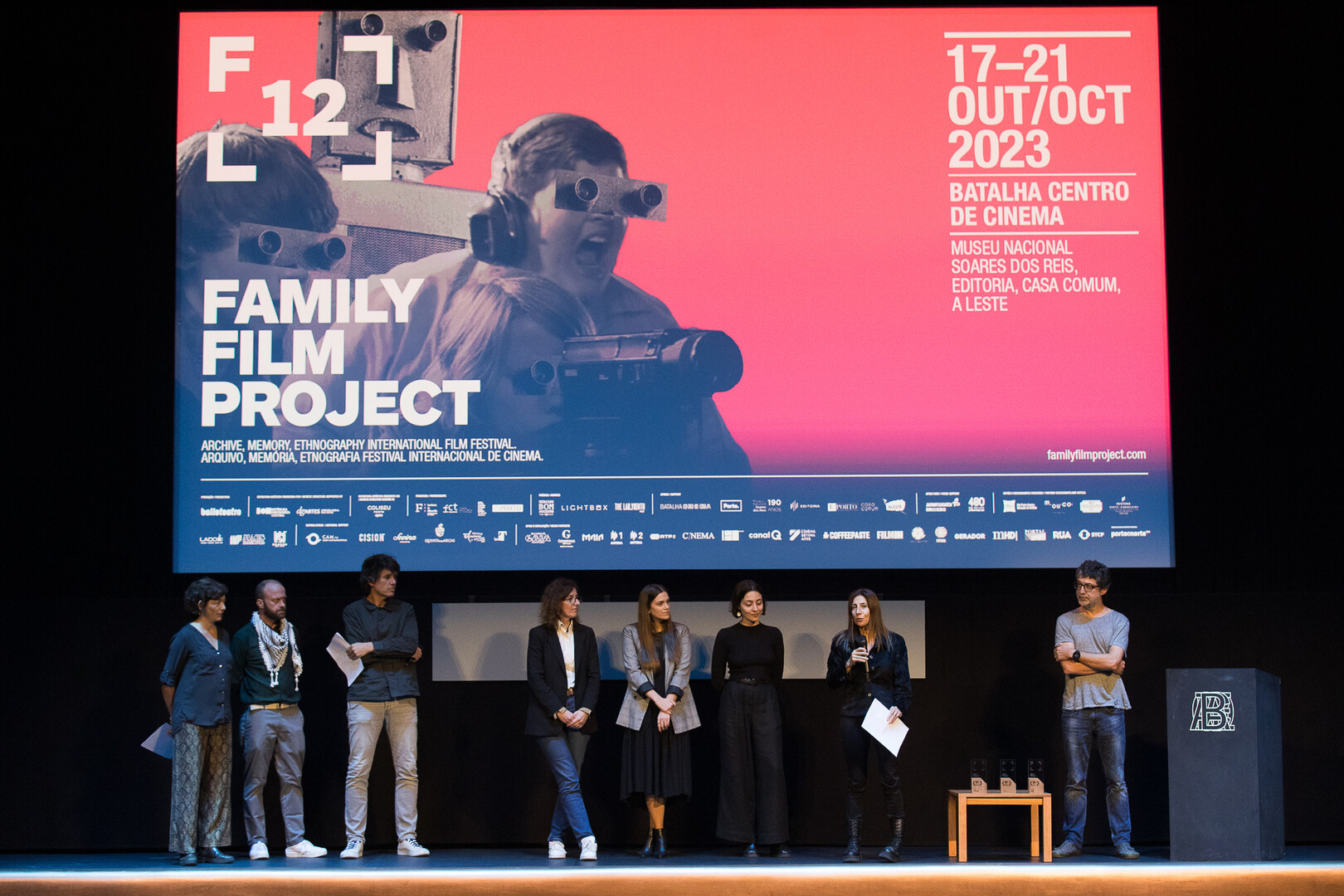
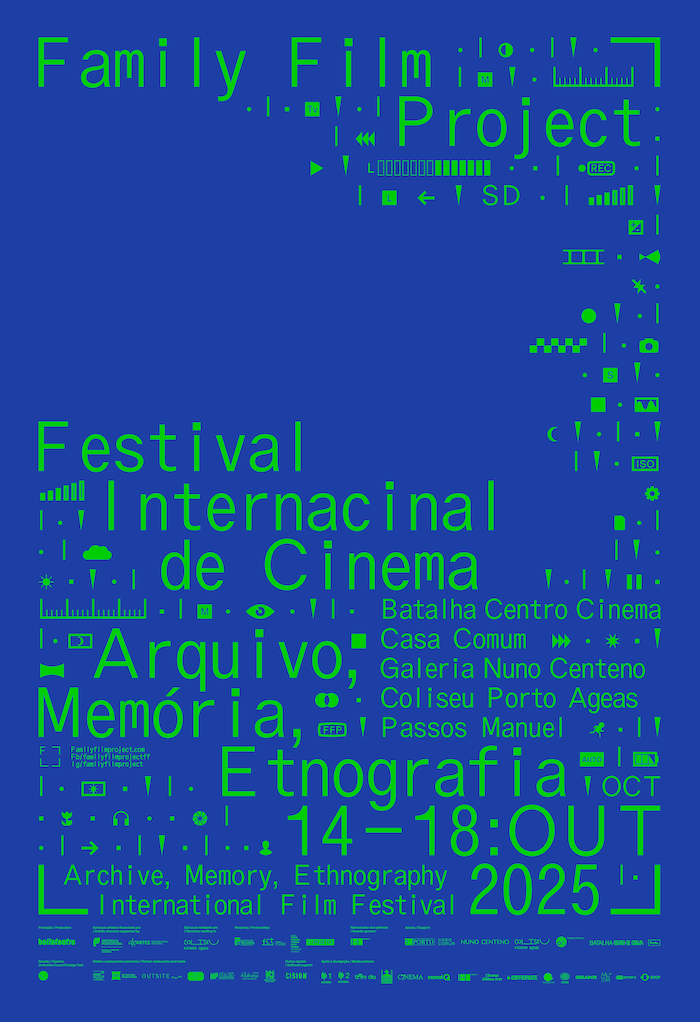
The Family Film Project has been held annually in Porto, Portugal, since 2012, with Né Barros and Filipe Martins as its artistic directors.
Dedicated to alternative forms of cinematic expression, the festival emphasizes the experimental and archaeological dimensions of the moving image, seeking to highlight the challenges of cinema in its dual testimonial and artistic nature—whether through ethnographic-experimental film, archival and found-footage cinema, the aesthetic reappropriation of home movies, or the hybridization between film and the performing arts.
In addition to its regular competitive section, the program always includes a special focus on internationally renowned filmmakers, artists, and scholars, such as Jonas Mekas (2012), Péter Forgács (2013), Alina Marazzi (2015), João Canijo (2016), Regina Guimarães (2017), Bill Nichols (2018), Daniel Blaufuks (2018), Jaimie Baron (2019), Cláudia Varejão (2019), Harun Farocki (2020), Ruben Östlund (2021), Catarina Alves Costa (2022), Naomi Kawase (2023), Ben Russell (2024), Jay Rosenblatt (2025), among many others.